All software

matchms
Python library for fuzzy comparison of mass spectrum data and other Python objects
- Big data
- Optimized data handling
- Batchfile
- Makefile
- Python
- + 1

Kernel Tuner
Kernel Tuner greatly simplifies the development of highly-optimized and auto-tuned CUDA, OpenCL, and C code, supporting many advanced use-cases and optimization strategies that speed up the auto-tuning process.
- Big data
- GPU
- High performance computing
- + 3
- Cuda
- Julia
- Python

Multiphase Code Repository by HZDR for OpenFOAM Foundation Software
The Multiphase Code Repository by HZDR provides research code based on OpenFOAM Foundation Software for simulating multiphase flows. Its focus is MultiMorph, an morphology-adaptive Euler-Euler model, supported by validation cases and workflows for robust industrial applications.
- Computational Fluid Dynamics
- Energy
- Euler-Euler method
- + 5
- C++
- Shell
- Lex
- + 2

Chemotion ELN
Chemotion ELN is an Open Source electronic lab notebook (ELN) for scientists working in chemistry and neighboring disciplines, developed mainly at Karlsruhe Institute of Technology (KIT). The web-based application allows the acquisition, management, storage, processing, and sharing of research data.
- Chemistry
- Electronic Lab Notebook
- Experimental Sciences
- + 2
- JavaScript
- Ruby
- SCSS
- + 5
FAIR Data Point
RESTful web service that enables data owners to expose their data sets using rich machine-readable metadata.
- Big data
- Inter-operability & linked data
- Dockerfile
- Makefile
- Python

ArrayAnalysis
ArrayAnalysis provides a user-friendly solution for transcriptomic data analysis. It allows researchers, regardless of their bioinformatics expertise, to efficiently analyse, explore, and interpret RNA sequencing and microarray datasets.
- Data Analysis
- data visualization
- microarray
- + 2
- Batchfile
- HTML
- Inno Setup
- + 2

ESMValCore
- Data analysis
- Earth & Environment
- FAIR Software
- + 2
- Python
- Jupyter Notebook
- HTML
- + 4
ETHOS.RESKit
RESKit aids with the broad-scale simulation of renewable energy systems, primarily for the purpose of input generation to Energy System Design Models.
- Concentrated Solar Energy
- ESD
- ESD - Topic 1
- + 4
- Python
- HTML

Code and data underlying the publication: City3D: Large-scale Building Reconstruction from Airborne LiDAR Point Clouds
Code and data underlying the publication: City3D: Large-scale Building Reconstruction from Airborne LiDAR Point Clouds
- Building
- Point Cloud
- Surface-reconstruction
- + 1
- Automake
- C
- C++
- + 8

dataquieR
dataquieR is an R package designed to conduct automated and standardized data quality assessments. It can be applied to all sorts of tabular data. Spreadsheet-type metadata can be used to specify descriptions, expectations, and requirements about the data.
- Cohort studies
- data quality
- data quality assessment
- + 11
- R
- JavaScript
- CSS
- + 1

Scholia
Graphical User Interface around Wikidata that uses SPARQL to collect data
- Wikidata
- CSS
- Dockerfile
- HTML
- + 3
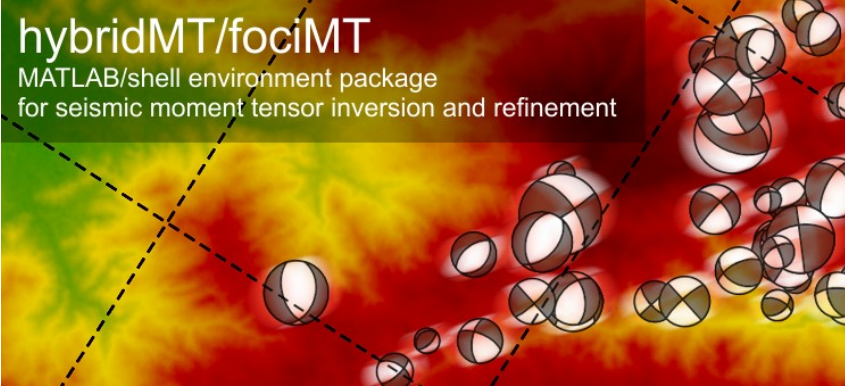
hybridMT
The hybridMT is MATLAB/shell environment software package for the seismic moment tensor inversion in time domain. The package allows to estimate fault plane parameters and the balance between volumetric and non-volumetric strain in the seismic source using different decomposition schemes.
- Earth & Environment
- moment tensor
- seismology