All software
splithalfr
Estimates split-half reliabilities for scoring algorithms of cognitive tasks and questionnaires.
- Cognitive tasks
- Confounding effects
- Non-linear scoring algorithms
- + 1
- R

CaNS
Canonical Navier-Stokes is a library for massively-parallel numerical simulations of fluid flows.
- Computational Fluid Dynamics (CFD)
- GPU
- Numerical analysis
- Awk
- Fortran
- Makefile
- + 3
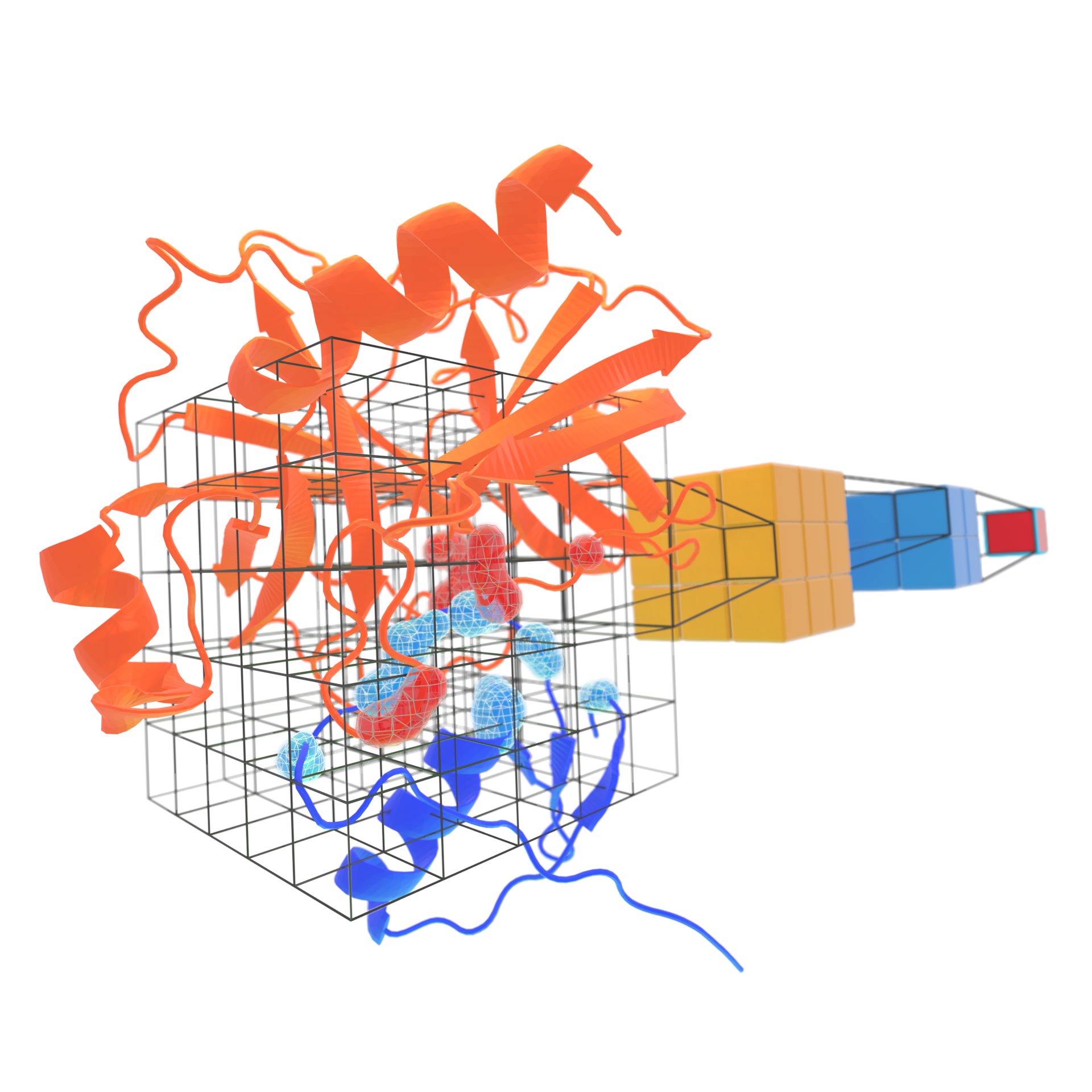
DeepRank
Deep learning framework for data mining protein-protein interactions using CNN
- Big data
- Machine learning
- Optimized data handling
- C
- Makefile
- Python
- + 2
Paired omics data platform
If you do metabolomics experiments with mass spectra and have sequenced the genomes of the samples, then the platform can help you link them.
- Inter-operability & linked data
- CSS
- Dockerfile
- HTML
- + 3

nnDetection
nnDetection: A Self-configuring Method for Medical Object Detection
- 3d-object-detection
- biomedical image analysis
- Detection
- + 3
- Python
- Cuda
- Dockerfile
- + 3

MercuryDPM
MercuryDPM is an open-source C++ framework for discrete particle simulations of granular materials, powders, and other particulate systems. It was started in 2009 to support complex scientific and industrial particle simulations. MercuryDPM is developed by an international open-source community.
- coarse-graining
- DEM
- Discrete Element Method
- + 6

BornAgain
Software to simulate and fit neutron and x-ray reflectometry and grazing-incidence small-angle scattering. The latter is computed as usual, using the distorted-wave Born approximation, hence the name. Users can set up arbitrary multilayer samples with interface roughness and embedded nanoparticles.
- Data analysis
- Modelling
- Photon and neutron science
- + 1
- C++
- Python
- CMake
- + 2
Parcels
Parcels (Probably A Really Computationally Efficient Lagrangian Simulator) is a set of Python classes and methods to create customisable particle tracking simulations using output from Ocean Circulation models. Parcels can be used to track passive and active particulates such as plastic and fish.
- lagrangian-ocean-modelling
- ocean-circulation-models
- particles
- Python
GrainLearning
Unsure about the parameters of your grains in a computer simulation? Use Iterative Bayesian Filtering to learn parameter distributions from limited data. Is your model running slowly? Speed up your simulations with machine-learning surrogates. All these features are integrated within GrainLearning.
- Bayesian Inference
- Data assimilation
- Machine learning
- + 2
- Jupyter Notebook
- PureBasic
- Python
- + 1

Matlab codes for Probabilistic Field Approach for Motorway Driving Risk Assessment
Matlab codes for Probabilistic Field Approach for Motorway Driving Risk Assessment
- automated driving
- Collision probability
- Reachability analysis
- + 1
Kadi4Mat
Kadi4Mat is a generic and open source virtual research environment.
- Aeronautics, Space and Transport
- Earth & Environment
- Electronic Lab Notebook
- + 9
- Python
- Vue
- HTML
- + 2

mosaik
mosaik is a co-simulation framework with focus on the energy system. It allows you to reuse and combine existing simulation models and simulators to create large-scale Smart Grid scenarios – and by large-scale we mean thousands of simulated entities distributed over multiple simulator processes.
- Energy
- Multi-scale & multi model simulations
- OpenSource
- + 2
- Python