All software
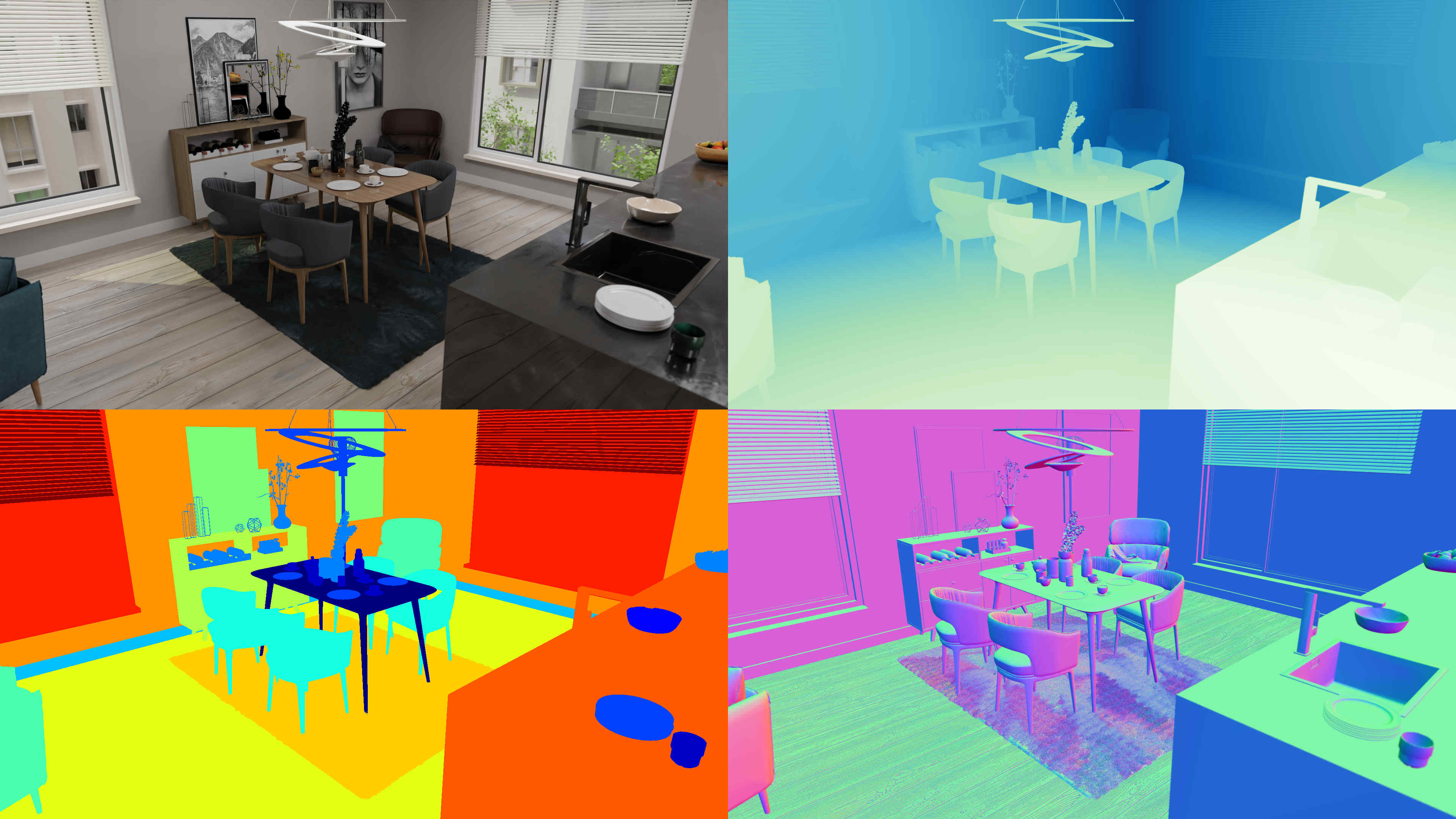
BlenderProc
A procedural Blender pipeline for photorealistic training image generation
- Blender
- Dataset creation
- Indoor Scene
- + 4
- Python
- TeX
BrainPrint
Our BrainPrint tools provide shape descriptors of neuroanatomical structures and require a FreeSurfer or FastSurfer segmentation as a pre-processing step. BrainPrint is based on “ShapeDNA” a spectral shape descriptor.
- Data analysis
- MRI
- open source
- + 1
- Python
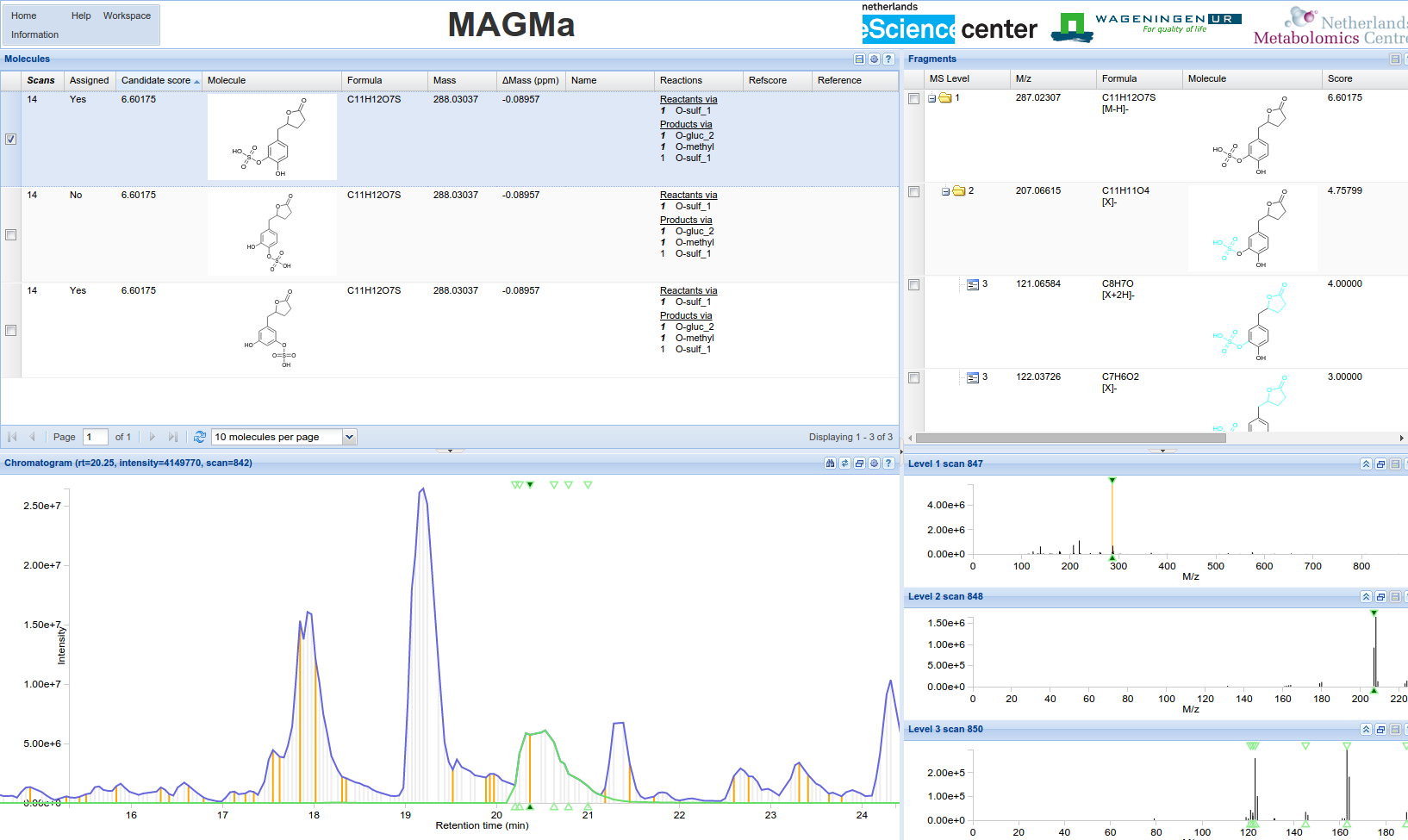
MAGMa
MAGMa is an online application for the automatic chemical annotation of mass spectrometry data.
- Big data
- Visualization
- CSS
- Cython
- Dockerfile
- + 5
TraP: The LOFAR Transients Pipeline
The LOFAR Transients Pipeline (or "TraP") is a Python and SQL based system for detecting and responding to transient and variable sources in a stream of astronomical images.
- Image processing
- radio astronomy
- Source association
- + 3
- Mako
- PLpgSQL
- Python
- + 1

DataSAIL
DataSAIL is an open-source software tool that splits machine learning datasets while minimizing Information Leakage. It formulates the splitting of a dataset as a constrained minimization problem and optimizes the data split towards an objective function that accounts for information leakage.
- Convex Optimization
- data management
- Data Splitting
- + 3
- Python
- Go Template
- Smarty

oemof.solph
oemof.solph is a model generator for energy system modelling and optimisation. It facilitates the formulation of (mixed-integer) linear programs from a generic graph-based structure, allowing to create multi-sector models on different levels of detail with user-defined time-resolution.
- Energy
- Energy System Analysis
- ESD
- + 2
- Python

Trixi.jl
Trixi.jl is a numerical simulation framework for conservation laws written in Julia with an extensible design with a fast implementation, Trixi.jl is focused on being easy to use for new or inexperienced users, including the installation and postprocessing procedures.
- CFD
- Earth & Environment
- hpc
- + 3
- Julia
- Jupyter Notebook
- Shell
- + 2

alpaka
The alpaka library is a header-only C++17 abstraction framework designed for computing accelerator development. It enables developers to implement algorithms once and execute them across a range of platforms, including x86, ARM, and RISC-V CPUs, as well as accelerators from NVIDIA, AMD, and Intel.
- C++
- CPU
- CUDA
- + 7
- C++
- Python
- CMake
- + 1

Ginkgo
Ginkgo is a high-performance math library for the solution of sparse linear systems on GPUs (AMD, Intel, NVIDIA). Ginkgo is implemented using modern C++ and provides preconditioned Krylov solvers, multigrid, sparse direct solvers, mixed precision, and batched functionality.
- GPU
- High performance computing
- Large linear equation system
- + 4
- C++
- CMake
- Cuda
- + 4

CHI2023_DKE
User Interaction Dataset for CHI 2023 paper "Knowing About Knowing: An Illusion of Human Competence Can Hinder Appropriate Reliance on AI Systems."
- Appropriate Reliance
- DunningKruger Effect
- Human-AI Decision Making
- + 1
- large-text-file
- Markdown
- Other
- + 2
R package for WALRUS (Wageningen Lowland Runoff Simulator)
R package for WALRUS (Wageningen Lowland Runoff Simulator)
- discharge simulation
- hydrological model
- hydrology
- + 4

PROTEUS
PROTEUS is a Python framework that simulates the coupled evolution of the atmospheres and interiors of rocky planets.
- Exoplanets
- model coupling
- Julia
- Jupyter Notebook
- Python
- + 2