All software

matchms
Python library for fuzzy comparison of mass spectrum data and other Python objects
- Big data
- Optimized data handling
- Batchfile
- Makefile
- Python
- + 1
Kernel Tuner
Kernel Tuner greatly simplifies the development of highly-optimized and auto-tuned CUDA, OpenCL, and C code, supporting many advanced use-cases and optimization strategies that speed up the auto-tuning process.
- Big data
- GPU
- High performance computing
- + 3
- Cuda
- Julia
- Python
FAIR Data Point
RESTful web service that enables data owners to expose their data sets using rich machine-readable metadata.
- Big data
- Inter-operability & linked data
- Dockerfile
- Makefile
- Python

ESMValCore
- Data analysis
- Earth & Environment
- FAIR Software
- + 2
- Python
- Jupyter Notebook
- HTML
- + 4
ETHOS.RESKit
RESKit aids with the broad-scale simulation of renewable energy systems, primarily for the purpose of input generation to Energy System Design Models.
- Concentrated Solar Energy
- ESD
- ESD - Topic 1
- + 4
- Python
- HTML

Code and data underlying the publication: City3D: Large-scale Building Reconstruction from Airborne LiDAR Point Clouds
Code and data underlying the publication: City3D: Large-scale Building Reconstruction from Airborne LiDAR Point Clouds
- Building
- Point Cloud
- Surface-reconstruction
- + 1
- Automake
- C
- C++
- + 8

Scholia
Graphical User Interface around Wikidata that uses SPARQL to collect data
- Wikidata
- CSS
- Dockerfile
- HTML
- + 3

CaNS
Canonical Navier-Stokes is a library for massively-parallel numerical simulations of fluid flows.
- Computational Fluid Dynamics (CFD)
- GPU
- Numerical analysis
- Awk
- Fortran
- Makefile
- + 3
DeepRank
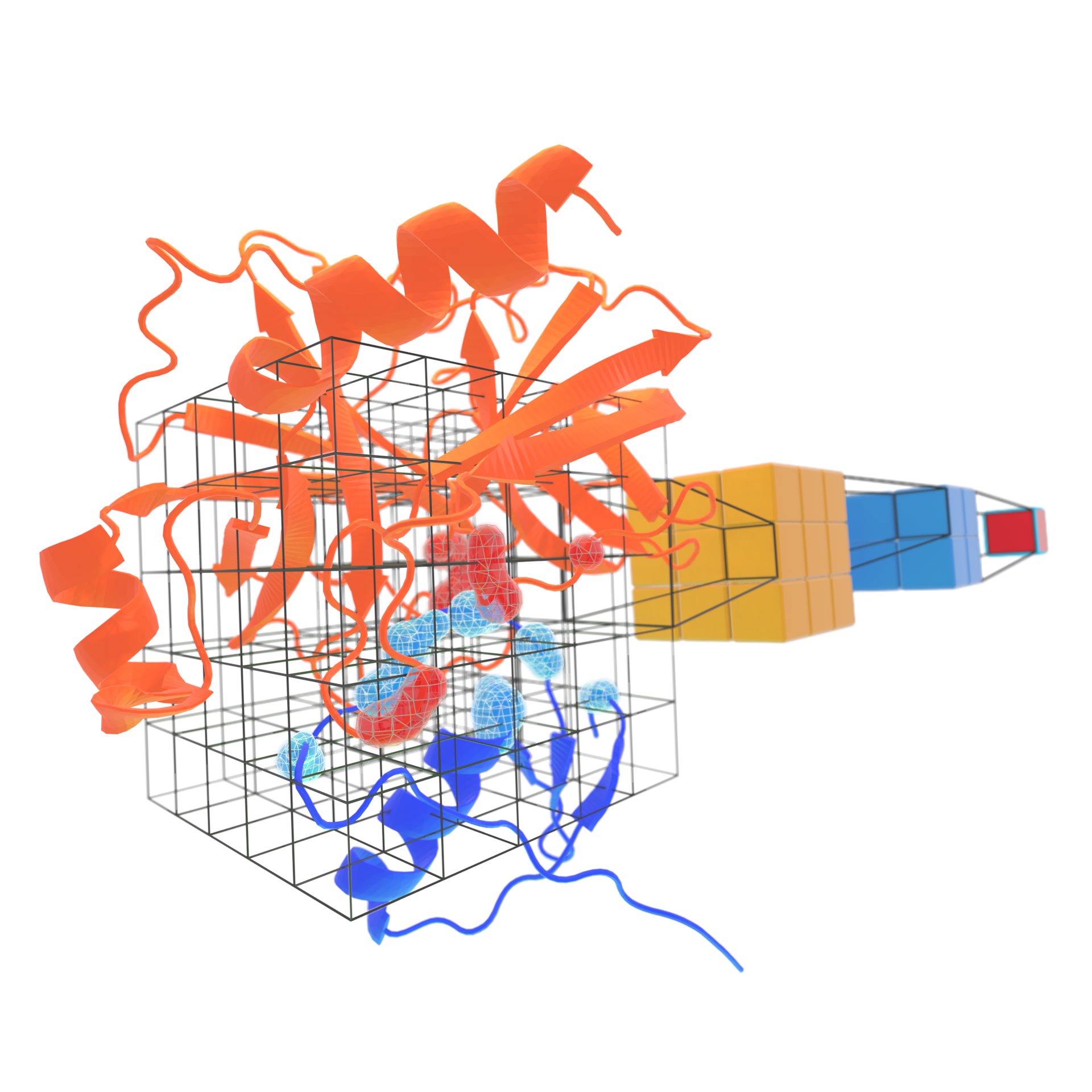
Deep learning framework for data mining protein-protein interactions using CNN
- Big data
- Machine learning
- Optimized data handling
- C
- Makefile
- Python
- + 2

nnDetection
nnDetection: A Self-configuring Method for Medical Object Detection
- 3d-object-detection
- biomedical image analysis
- Detection
- + 3
- Python
- Cuda
- Dockerfile
- + 3

BornAgain
Software to simulate and fit neutron and x-ray reflectometry and grazing-incidence small-angle scattering. The latter is computed as usual, using the distorted-wave Born approximation, hence the name. Users can set up arbitrary multilayer samples with interface roughness and embedded nanoparticles.
- Data analysis
- Modelling
- Photon and neutron science
- + 1
- C++
- Python
- CMake
- + 2

Parcels
Parcels (Probably A Really Computationally Efficient Lagrangian Simulator) is a set of Python classes and methods to create customisable particle tracking simulations using output from Ocean Circulation models. Parcels can be used to track passive and active particulates such as plastic and fish.
- lagrangian-ocean-modelling
- ocean-circulation-models
- particles
- Python