All software

Ginkgo
Ginkgo is a high-performance math library for the solution of sparse linear systems on GPUs (AMD, Intel, NVIDIA). Ginkgo is implemented using modern C++ and provides preconditioned Krylov solvers, multigrid, sparse direct solvers, mixed precision, and batched functionality.
- GPU
- High performance computing
- Large linear equation system
- + 4
- C++
- CMake
- Cuda
- + 4
JEMRIS
JEMRIS is a versatile, open-source, multi-purpose MRI simulator. It is well-suited for research and education.
- MRI
- Simulation
- C++
- Python
- MATLAB
- + 5

oemof.solph
oemof.solph is a model generator for energy system modelling and optimisation. It facilitates the formulation of (mixed-integer) linear programs from a generic graph-based structure, allowing to create multi-sector models on different levels of detail with user-defined time-resolution.
- Energy
- Energy System Analysis
- ESD
- + 2
- Python
iScore
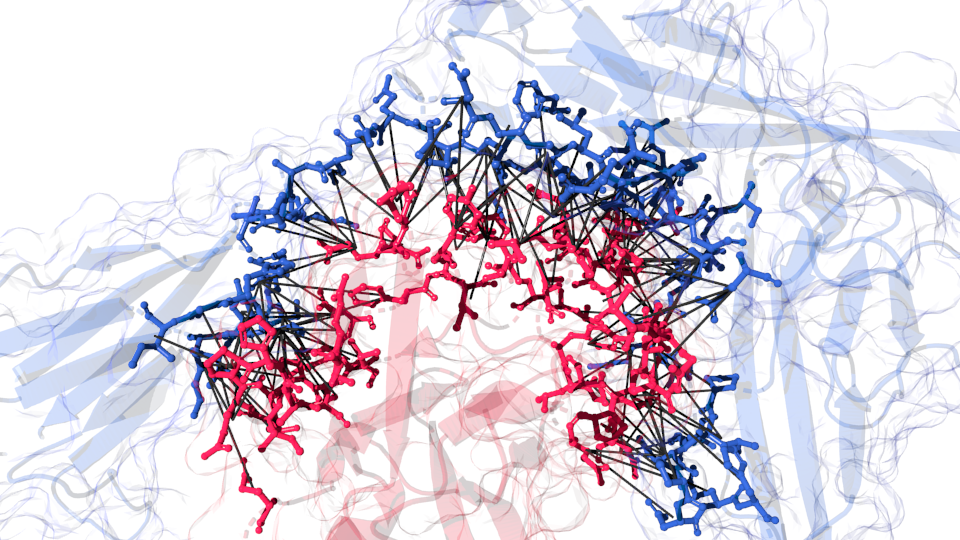
A framework and predictor based on support vector machine and random walk graph kernel for scoring protein-protein interfaces.
- Big data
- Machine learning
- Protein-Protein Interaction
- (C++)
- (Cuda)
- (Makefile)
- + 1

Trixi.jl
Trixi.jl is a numerical simulation framework for conservation laws written in Julia with an extensible design with a fast implementation, Trixi.jl is focused on being easy to use for new or inexperienced users, including the installation and postprocessing procedures.
- CFD
- Earth & Environment
- hpc
- + 3
- Julia
- Jupyter Notebook
- Shell
- + 2

Mainzelliste
Mainzelliste is an extensible web-based pseudonymisation tool used for generating and managing the pseudonyms from identifying data which supports multiple ways of secure, error-tolerant record linkage.
- Clinical-Research
- Patient Management
- Pseudonymization
- + 2
PEPC
The PEPC project (Pretty Efficient Parallel Coulomb Solver) is a public tree code that has been developed at Jülich Supercomputing Centre since the early 2000s. Our code is a non-recursive version of the Barnes-Hut algorithm, using a level-by-level approach to both tree construction and traversals.
- Barnes-Hut
- High performance computing
- hpc
- + 2
- Fortran Free Form
- C
- Shell
- + 2

Tillage-controlled Runoff Pattern model (TCRP) v1.1; a GIS model to adjust runoff patterns for tillage induced roughness in agricultural catchments
Tillage-controlled Runoff Pattern model (TCRP) v1.1; a GIS model to adjust runoff patterns for tillage induced roughness in agricultural catchments
- DEM
- erosion pattern
- modelling
- + 2

CubeGUI
Cube, which is used as performance report explorer for Scalasca and Score-P, is a generic tool for displaying a multi-dimensional performance space consisting of the dimensions (i) performance metric, (ii) call path, and (iii) system resource.
- High performance computing
- Information
- Performance Analysis
- + 4

mosaik
mosaik is a co-simulation framework with focus on the energy system. It allows you to reuse and combine existing simulation models and simulators to create large-scale Smart Grid scenarios – and by large-scale we mean thousands of simulated entities distributed over multiple simulator processes.
- Energy
- Multi-scale & multi model simulations
- OpenSource
- + 2
- Python

grlc
Builds a web API from SPARQL queries hosted on GitHub to accessing triple store data.
- garlic
- Inter-operability & linked data
- (CSS)
- (Dockerfile)
- (HTML)
- + 4
MFDFA
The Python package `MFDFA` provides the tools to perform a multifractal detrended fluctuation analysis that enables the investigation of stochastic processes where long-range memory and persistence are necessary to consider.
- Data analysis
- Energy
- ESD
- + 3
- Python